Ads 468x60px

Subscribe:

Social Icons

lunes, 15 de septiembre de 2014

Microsoft Is Officially Buying Minecraft For $2.5 Billion


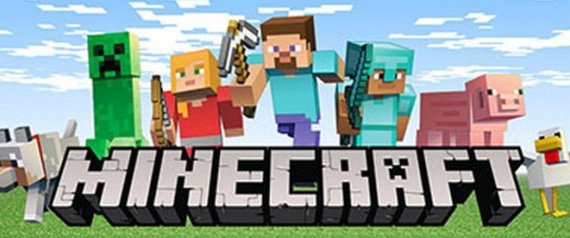
Microsoft is officially buying Mojang, the Swedish game developer behind the hugely popular game "Minecraft," Microsoft announced on Monday.
The deal will cost Microsoft $2.5 billion and the acquisition will close towards the end of the year. "Minecraft" has been downloaded more than 100 million times on PC in the past 5 years and is the most popular game on Microsoft's Xbox gaming system.
Microsoft is attempting to reassure Minecraft fans who have been vocal about their concerns for the game's future. “ ‘Minecraft’ is one of the most popular franchises of all time,” said Phil Spencer, head of Xbox. “We are going to maintain ‘Minecraft’ and its community in all the ways people love today, with a commitment to nurture and grow it long into the future.”

The people at Minecraft were less comforting: "We’re still working a lot of this stuff out," Minecraft wrote in a blog post on Monday. "Mega-deals are serious business."

Original post: http://www.huffingtonpost.com/2014/09/15/microsoft-buying-minecraf_n_5822002.html?utm_hp_ref=technology

The FBI just finished building its facial recognition system


The FBI's Next Generation Identification (NGI) system is now fully operational, after more than three years of development. The bureau announced today that development on the project is complete, and it would be rolling out new features for ongoing criminal notifications as well as a controversial facial recognition feature called the Interstate Photo System, or IPS. IPS will serve as "an image-searching capability of photographs associated with criminal identities," according to the release.
The facial recognition system has come under fire from privacy groups for mixing traditional mug shot photos with non-criminal faces pulled from employment records and background check databases. The system is expected to collect as many as 52 million faces in total. Some in the industry have also called out the IPS as ineffective, based on its relatively low rate of success. For a given face, NGI returns a list of 50 candidates, and only promises an 85 percent chance that the suspect will be on the list.
Still, for anyone concerned about the privacy implications of facial recognition tech, the new system is cause for alarm. Law enforcement groups across the country will soon start working with the system, and we're likely to see more stories like this one as the technology spreads.


Three Things Apple Can Do to Fix iCloud’s Awful Security


Apple’s reality distortion field makes for epic product launches. But it doesn’t keep sext-snatching hackers out of your iCloud account.
As the glow of Apple’s new iPhones and watch announcements fades, the company has yet to fix the security issues that resulted in a highly public violation of its users’ privacy: the leak of dozens of nude photos of celebrities including Jennifer Lawrence and Kate Upton, seemingly stolen from iCloud backups. And as the photos spread across the web last week, the conversations on scummy forums devoted to hacked nudes like Anon-IB made clear that Apple’s security weaknesses were still being exploited.
Chief executive Tim Cook has vowed to tighten the company’s protections for its users’ private parts. Users will be sent an email when someone restores their iCloud account from a new device, a warning that Apple neglected to send in the past, he told the Wall Street Journal. And its two-factor authentication system, which requires the user to have access to a temporary code sent to his or her phone, will be extended to iCloud and more strongly suggested to users. Apple didn’t respond to a request for more information on the new measures, which are expected to kick in this week.
But Cook’s promised changes sound like band-aids, not fundamental fixes. Warning users after a hacker has already gained access to their account isn’t exactly reassuring. And practically speaking, the vast majority of users won’t turn on a technical-sounding feature that adds another hurdle to their login process. “I wouldn’t be surprised if the adoption rate remains at less than one percent, and people still get hacked,” says Nik Cubrilovic, a Sydney, Australia-based security consultant who wrote a deep analysis of the iCloud hack earlier this month. When Cubrilovic added two factor authentication to his own iCloud account, he says he waited three days for it to come into effect. “What’s the awareness rate? How many people are going to sign up and wait three days? But next time someone gets hacked, Apple can shift the blame. They can say ‘it’s out of our hands.’”
Instead of that security theater performance, Cubrilovic and others who have tracked Apple’s security nightmare suggest a few unorthodox changes that go to the root of iCloud’s leaks.

Kill the Security Question

Asking users about their “first job,” “first car” or “city where your parents met” to reset their password has long been a laughably weak link in authentication schemes. Those answers are far more easily guessed or dug up with research than a password—especially for celebrity stalkers or those hacking their acquaintances or ex-significant others. Password reset questions are the idiocy that led directly to the devastating hack of WIRED’s Mat Honan two years ago, and nothing has fixed them since.
Far safer is to require that users who forget their password retrieve a reset link from their email. And in the slim subset of cases where users no longer have access to that email address, their snail-mail addresses can serve as slower stand-ins, argues iOS forensics expert Jonathan Zdziarski. If Apple requires users to keep a physical mailing address on file, Apple could mail them a one-time recovery key. To cover the cost of the stamp, he suggests Apple even charge users the shipping costs. “If you’re daft enough to not only lose your password but also access to your email, you should have to pay 50 cents or a dollar to mail you that piece of paper,” Zdziarski says. “Call that the ‘stupid tax.’”

Make Password Delinquents Show Up in Person

Cornell computer security professor Ari Juels has a suggestion for a faster last resort recovery method: Demand that password amnesiacs prove their identity in person.
People are accustomed to having to prove their identity with physical documents, argues Juels, who recently left a position as chief scientist at authentication security firm RSA. And Apple already has a network of meatspace retail outlets across America and Europe. So it could require users who want to reset their password to show up at one of its Genius Bars to prove themselves. To extend the fix to places without Apple Stores (sorry Wyoming, Montana, and the Dakotas) Apple could partner with post offices and banks—what Juels describes as “authentication authorities.” The company even has some of those relationships already: As it announced last week, its Apple Pay system will require users to go to a cooperating bank branch to add a new credit card number to their phone.
Juels admits that showing up in person is less convenient than security questions. But faking physical identification is far harder than Apple’s paper-thin safeguards against digital impersonation. “For the moment, convenience is king, and it’s not convenient to show up at the Apple Store to recover your password,” says Juels. “But eventually the problem may be so acute that we do try physical presence.”

Make Two-Factor the Law of the Land

With those new recovery options in place, Apple could then make its two-factor authentication more than a fig leaf. Instead of merely allowing or even encouraging users to turn it on, it could make two-factor the default for all new accounts, suggests Cubrilovic. ”There’s practically no reason why they can’t do that,” he says.
Requiring a second device be used to generate temporary login codes would nix the risk of account takeovers even when users have weak passwords or fall for phishing attacks that trick them into giving up their credentials. (Sophisticated phishers could steal the temporary code, too. But they’d need to use it immediately, making the attack less practical.)
For existing users, Apple could aggressively remind them to set up the second-device security measure rather than offering polite suggestions. And Cubrilovic also calls for Apple to cut the three-day wait time to put that measure in place, which doesn’t exist with similar services from Twitter and Google.
The barrier until now to universal two-factor authentication has been the risk that users might be permanently locked out of their accounts if they lose their second device and also can’t access their email. But Zdziarski’s and Juels’ ideas of snail-mail and in-person password resets could solve those corner cases.
The full set of new security measures they suggest would require Apple to invest in serious new infrastructure and user education. But Zdziarski argues that Apple owes it to its customers to take their security seriously, rather than treat them as hackable dolts. “Apple is the biggest company in the world right now. They should already be implementing these solutions,” he says. “To some degree, they’ve underestimated the sensitivity of users’ data. If you value it, you’re going to need to take steps to protect it.”


Original post: http://www.wired.com/2014/09/three-things-apple-can-fix-iclouds-awful-security/

viernes, 12 de septiembre de 2014

Microsoft to Phase Out Nokia Brand, According to Leaked Document


Microsoft is planning to phase out the use of its Nokia and Windows Phone brands for marketing purposes in favor of Lumia, according to a company document leaked on Wednesday.
The internal memo was first acquired by GeeksOnGadgets and confirmed by The Verge. The changes are set to take affect during the upcoming holiday campaign for its phones.
See also: Hands-On With the Nokia Lumia 830, the 'Affordable Flagship'
"As part of our phased transition, we will drop the manufacturer name from product references during the Holiday campaign," the document reads.
Windows Phone will simply be Windows, with Lumia used as the branding for models. Microsoft reps could not be reached for comment.
Microsoft purchased Nokia's device and services business in September 2013 for $7.2 billion. Nokia, once a dominant player in the cellphone industry, has seen its market share decline steadily since 2010.


Original post:  http://mashable.com/2014/09/10/microsoft-replace-nokia-lumia/

Is Online Dating Worth It? An FAQ


You've probably heard of online dating. You may even have a few friends that do it. But, despite your curiosity, you haven't been able to convince yourself to actually try it out. We're here to answer some of your burning questions.
I'm like a walking commercial for online dating. I tried OkCupid for about a week, met a girl within a couple days, and two and a half years later, we're getting married. Dating sites would like you to think this is a common occurrence, but the more people I talk to, the more I learn that everyone's experience is different.
However, I've also learned that there are a lot of misconceptions and fears about online dating that prevent people from giving it a try. And, while I can't promise everyone's experience will be as great as mine, I do think it's worth a shot. Here are a few questions I often get from people who are curious...but haven't yet taken the plunge.

Are people really doing this?

When it comes to the internet, there's not much people aren't doing. The question is whether the people doing it are the ones you'd want to date. And you'd be surprised.
Online dating is kind of like farting in public. Most people won't admit it, but plenty of them do it. Unlike farting in public, though, online dating's stigma is quickly going away. If you ask around, you'll be surprised how many people you know are doing it. It's not just internet-addicted geeks (myself notwithstanding).

What if someone I know sees my profile?

What do you have to be embarrassed about? Didn't you read the answer to question 1? Remember: there are more people doing this than you probably realize. If one of your friends is going to judge you for trying to find love, then maybe they just aren't very nice. And if you're saying stupid stuff on your profile...well, don't. If you wouldn't want a friend to see it, you probably wouldn't want it to be the first thing a potential date sees.
More importantly: on most dating sites, your profile isn't truly "public". The only people who can see your profile are other people signed up for the site. So if someone you know sees your profile...well, they're on the site too, aren't they? Neither of you have anything to be embarrassed about. I ran into a couple friends on OkCupid, and it ended up being really funny—and we ended up talking a lot more about our experience later on.

Isn't online dating unsafe?

Sure, meeting strangers can be unsafe. B but consider this: meeting someone online, especially after you have a chance to vet them, is no less safe than meeting someone at a bar or a club. In fact, unless you have a buddy system with Batman, it's probably safer.
That said, it's only safer if you take the necessary precautions: don't post personally identifiable information (like your phone number or address) on your profile, and only give it out after you've messaged with someone enough to feel comfortable giving it out. Schedule your date for a public place, let someone know where you are, and so on. We've talked about this in detail before, so check out that post for more info.

Doesn't everybody just lie online?

Slow down, Dr. House. Sure, it happens: This person adds a few inches to his height, that person hides a few inches from their waistline, and you get a big surprise when you meet in person. But that guy you met at the bar lied about being married, too. People don't lie because it's the internet. People lie because sometimes people are dumb.
Fortunately, not everyone does it. Plenty of people realize that it's better to be honest, lest they lose points as soon as they walk in the room. You'll have to deal with a few liars, but you'll quickly learn to read between the lines. (By the way, it should go without saying, but this goes both ways: don't lie on your profile either.)

Online dating seems really impersonal.

That's not a question, but I'll forgive you. Keep in mind thatyou're only "online" for a small portion of your interaction with someone—after a few messages, you're usually out on a date, interacting in meat space.
That said, the "searching for dates" portion of the process can feel impersonal—scanning people's profiles, looking at pictures, responding to some messages and X-ing others out. But we often do the same thing in real life: we walk into a social gathering, size people up, ask who's single, and so on.
"But what about just meeting people organically?" I can hear some of you say. Think of it like this: instead of waiting for Mr. or Mrs. right to appear in front of you, you're taking an active role in finding someone who shares your interests and values. It hardly feels impersonal when you put it that way. (Well, most of the time).

Are paid sites better than free ones?

"Better" is relative. You probably have a chance of getting less "spam" on paid sites, but that's just one portion of the equation. Free sites might skew younger or have more members, while some paid sites might contain more serious relationship-seekers. There are pros and cons to each, and it's better to evaluate each site's advantages rather than worrying about free vs paid.

What should I say in my profile? How much should I reveal?

Let's start by going back to a point I made earlier: don't lie. We all try to put forward the best version of ourselves, but try to avoid forming your persona based on success statistics. You'll have better luck if you're honest.
Most importantly: don't overthink it. Talk about yourself, what you like to do, and who you are. If you're funny, be funny, but don't force it. Don't be overly self-deprecating, don't make offensive comments, and try not to write the same tired jokes as everyone else ("The most embarrassing thing I'm willing to admit is that I'm on OkCupid" or "I'm so bad at talking about myself!"). You can write as much or as little as you want, but be careful—too much and you run the risk of oversharing, too little and people won't have anything to go off of.

What should I say in my messages?

Like your profile, keep your messages fairly short—but not so short that it's generic and useless ("hey girl u r cute"). Write a couple sentences about something you saw in their profile that interested you, something about yourself that you share in common, and ask a question—that way they have somewhere to start with their response.

At what point should we meet in real life?

Meeting in person varies from site to site, and from person to person—but err on the side of early. This isn't an online forum for endless chatting. It's a dating site, so once you've established that you're both interested, ask them out on a date! If you wait too long, they may think you aren't interested in and move on.

I'm getting no responses to the messages that I send out. It's frustrating!

This is a common complaint—often from men—and there are a few reasons it could happen. Give your profile a once-over and see if there might be any off-putting remarks. Make sure you're sending messages that aren't too short and quippy, or too long and detailed. If you need some help, have a friend critique your profile, or post it in a forum like /r/okcupid (or whatever site you're using). That helped me a ton when I started out.
Secondly: it's hard at first, but you have to think of online dating as a numbers game. Don't get too attached to people's online profiles. Send out as many messages as you can to anyone that seems cool—you'll get a few messages back, and maybe a few of those will turn into dates. It becomes a lot less stressful once you realize that the first stage is just about initiating contact, not looking for the "perfect person" based on their online persona.

I'm getting a billion messages without having done anything. It's overwhelming!

A more common problem for women, chances are a lot of the messages you're receiving are junk. Just like an overflowing email inbox, don't keep checking your messages throughout the day. Turn off notifications, set aside a block of time to go through it all at once and respond to the good stuff. It's much less overwhelming, and pretty easy to weed through.

Tell it to me straight: Does online dating actually work?

Honestly? I don't know if it will work for you. That's a crap answer, but it's the only answer I have. Sorry.


Original post:  http://lifehacker.com/is-online-dating-worth-it-an-faq-1633598636


Windows 9's new Start menu demonstrated on video


Microsoft may have demonstrated its new Start menu earlier this year, but thanks to a recent "Windows 9" leak we’re now seeing every single part of the company’s plans for bringing back this popular feature. German site WinFuture has posted a two-minute video that demonstrates how the Start menu works in the next major release of Windows. As you’d expect, it’s very similar to what Microsoft demonstrated with traditional apps mixing with modern apps (and their Live Tiles) into a familiar Start menu. The account options have been placed at the top of the Start menu for now, allowing you to lock and sign out of a machine, while shutdown and restart options can be access by a visible button alongside the account section. The new Start menu consists of two sections: one for a list of traditional apps in the familiar left pane, and a new section on the right that consists mainly of modern apps with Live Tiles. However, the right section can collapse to make way for Start menu users to dig into File Explorer, otherwise it appears to work just like the Windows 7 menu with options to pin apps and browse through a list of all apps.


Once more and more apps are pinned to the Start menu, it expands automatically and there are options to resize Tiles in a way that’s identical to the regular Start screen in Windows 8. While this new Start menu clearly isn’t designed for tablet users, there appears to be an option to "use the Start menu instead of the Start screen" for those with mouse and keyboard users. That will likely be enabled by default, and Microsoft may even remove the fullscreen Start screen altogether for desktop users in favor of a Start menu that expands.


Netflix and Other Big Websites Protest Proposed Net Neutrality Rules


WASHINGTON – Dozens of websites joined a symbolic protest Wednesday against the Federal Communications Commission’s proposed rules governing net neutrality, which opponents say would result in Internet traffic being divided among fast lanes for companies that can afford them and slow lanes for everyone else.
Netflix, Mozilla, Reddit and numerous other websites have displayed boxes with the familiar “loading” pinwheel icon and messages including, “If there were Internet slow lanes, you’d still be waiting.”
The protest is part of a campaign that has many of those companies and organizations calling for the F.C.C. to regulate broadband Internet service like a utility, subjecting it to strict operating rules and possible rate controls.
The commission has asked for comment on that possibility, but Tom Wheeler, the chairman of the F.C.C., has said that he believes the commission has the ability to enforce net neutrality – the concept that no content provider should have to pay special fees to be seen online – without taking that step.
Nothing in the F.C.C.’s proposed rulemaking on “Protecting and Promoting the Open Internet” authorizes a division of Internet traffic between fast and slow lanes. The proposal would prohibit blocking of legal Internet content or devices and subject other network management practices by Internet service providers to a “commercially reasonable” standard.
The proposal also asks for comment on “whether certain practices, like paid prioritization, should be barred altogether.” Not barring a practice, of course, makes it potentially legal, and that is the premise that net neutrality supporters have seized upon to say that any creation of a fast lane for those that can pay the toll means anyone who cannot or chooses not to pay is relegated to a slow lane.
David Segal, executive director of Demand Progress, one of the sponsors of the symbolic slowdown, said in a statement, “The cable companies have millions of dollars, but our side will prevail because we have millions of people. More Americans have already spoken out in support of net neutrality than around any other cause that has ever been before the F.C.C., and our growing coalition will continue to fight for an Open Internet until it has been secured.”
Comcast, in a blog post, countered that some of the protesters are falsely saying that cable companies want to “break the Internet.”
“As today’s actions show, the availability and access to lawful content and websites online is ultimately up to the provider of that specific content,” wrote David L. Cohen, a Comcast executive vice president. “We continue to be committed to delivering the same high-quality, high-speed Internet service that our customers rely on each and every day.”
The F.C.C.’s Open Internet proposal remains open for public comment through Monday.


Original post: http://bits.blogs.nytimes.com/2014/09/10/netflix-and-other-big-websites-protest-proposed-net-neutrality-rul
 
Blogger Templates