Ads 468x60px

Subscribe:

Social Icons

Mostrando entradas con la etiqueta Mobile. Mostrar todas las entradas

miércoles, 17 de septiembre de 2014

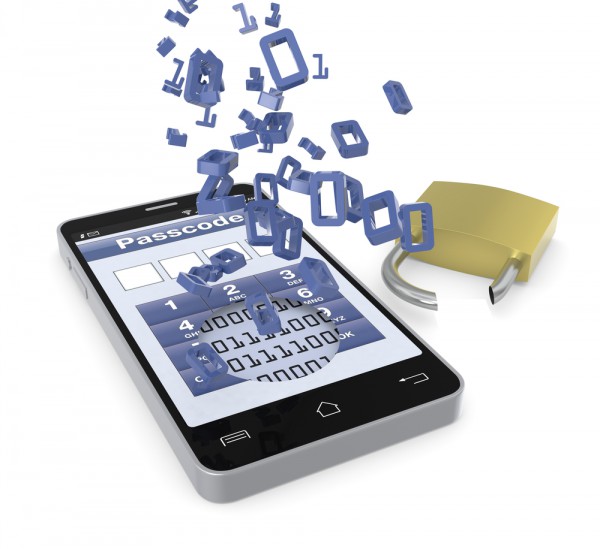
Over three-quarters of mobile apps will fail security tests by 2015

New research by analysts at Gartner shows that more than 75 percent of mobile apps are set to fail basic security tests by 2015.
This is a particular worry for enterprises as employees may download software from app stores. These apps offer minimal or no security assurances but are able to access sensitive business data and violate company security policy.

"Enterprises that embrace mobile computing and bring your own device (BYOD) strategies are vulnerable to security breaches unless they adopt methods and technologies for mobile application security testing and risk assurance," says Dionisio Zumerle, principal research analyst at Gartner. "Most enterprises are inexperienced in mobile application security. Even when application security testing is undertaken, it is often done casually by developers who are mostly concerned with the functionality of applications, not their security".

Existing security vendors will need to modify their approach and their products in order to adapt to these new threats. As well as testing the client layer -- the app on the mobile itself -- there's also a need to look at the server layer. Code and user interfaces of server side applications need to be tested to ensure that data isn't leaked.

"Today, more than 90 percent of enterprises use third-party commercial applications for their mobile BYOD strategies, and this is where current major application security testing efforts should be applied," says Zumerle. "App stores are filled with applications that mostly prove their advertised usefulness. Nevertheless, enterprises and individuals should not use them without paying attention to their security. They should download and use only those applications that have successfully passed security tests conducted by specialized application security testing vendors".

Looking further ahead to 2017, Gartner predicts that the focus of security breaches will have shifted to tablets and smartphones. Already it says there are three attacks on mobile devices for every one on a desktop.
It also expects that by 2017 misconfiguration of apps rather than actual attacks will account for 75 percent of mobile breaches. Gartner recommends that enterprises focus on data protection on mobile devices by employing usable and efficient solutions like application containment.


martes, 16 de septiembre de 2014

Chinese city introduces separate walking lane for mobile phone users


Ask anyone that’s lived in a busy city and they’ll tell you that navigating a crowded sidewalk can be a pain. Add in the fact that a large portion of the population now does this while multitasking on their smartphone and the situation suddenly goes from bad to worse.
A large city in China, however, has come up with a simple solution they thought would help ease the frustration. Chongqing, a municipality of around 28 million in southwest China, recently introduced separate walking lanes for people using mobile devices.
Certain pathways in the city’s entertainment district are clearly marked with icons and writings on both the sidewalk and on nearby signs. Nong Cheng, a spokeswoman for the district’s property management company, said there are lots of elderly people and children on their streets and walking while interacting with a mobile device could cause unnecessary collisions.


Cheng added that many pedestrians have been stopping to take photos of the markings and signs but most don’t seem to be following the guidelines.


miércoles, 3 de septiembre de 2014

Samsung Galaxy Edge Looks Like the Future


When it comes to gadget reporting, the word "futuristic" is overused. But Samsung's Galaxy Edge smartphone, which brandishes a thin, curved screen along the right side, definitely qualifies for the label.
The Galaxy Edge isn't like anything we've seen before. Sure, there have been curved screens, but those are models where the whole screen is curved, not just the edge. The Galaxy Edge is basically two screens in one: a gorgeous main Quad HD display (2,560 x 1,440) that's identical to the one on the Galaxy Note 4, and a thin strip populated with icons, widgets or useful information.

You can also customize the wallpaper for the edge, selecting from any photo (or a combination of photos) and a series of filters. Moving the phone back and forth will move the image slightly. Trust me, the effect is actually incredibly cool.
Most importantly, Samsung will release an API for the edge display, so apps can use the screen in clever ways. Samsung is showing the way with the camera UI — all the controls are on the edge strip, while the main screen shows nothing but images.
If you're a lefty, you don't need to wait for Samsung to release a left-handed version. Just flip the phone upside-down, and the entire display will rotate 180 degrees. Of course, the home button will be on top, but you can't have everything.


Blogger Templates